Introduction
If you recently searched “software Doxfore5 dying”, you’re not alone. Over the past year, more users have started questioning whether Doxfore5 is still relevant or slowly fading away.
Software tools don’t disappear overnight. Instead, they go through stages — growth, peak popularity, slow decline, and eventually replacement. The big question is: Where does Doxfore5 stand today?
In this in-depth guide, we’ll look at the real situation, warning signs, user concerns, and whether you should continue using it or start planning a switch.
What Is Doxfore5 and Why Was It Popular?
Doxfore5 became popular because it solved a real problem: simple workflow management without complexity.
It offered small teams and freelancers an easy way to manage:
- Document workflows
- Team collaboration
- Basic project tracking
- File sharing
- Light CRM features
Unlike enterprise tools, Doxfore5 was lightweight and affordable. Many startups and solo entrepreneurs adopted it because it required no technical setup and had a beginner-friendly interface.
For years, it filled the gap between simple task managers and expensive enterprise software.
Why People Think Doxfore5 Is Dying

Let’s address the main reason this keyword is trending. Multiple signs suggest that Doxfore5 may be entering a decline phase.
1. Major Updates Have Slowed Down
In the software world, innovation is survival.
Users expect regular feature releases and improvements.
However, Doxfore5 has recently shown:
- Very few major feature updates
- Mostly bug fixes and maintenance patches
- No major roadmap announcements
This creates uncertainty and reduces user confidence.
2. Competitors Are Moving Much Faster
The productivity software industry has changed dramatically. New tools now include:
- AI automation
- Smart integrations
- Advanced analytics
- Real-time collaboration
Compared to modern solutions, Doxfore5 feels outdated and limited.
This doesn’t mean it stopped working — it simply stopped evolving fast enough.
3. Reduced Online Buzz and Community Activity
A healthy software ecosystem usually has:
- Active forums
- Tutorials and YouTube guides
- Frequent social media discussions
- Third-party integrations
Search interest in Doxfore5 has dropped, and fewer new resources are being created. This is often a strong sign of declining adoption.
4. Customer Support Concerns
Many long-time users mention:
- Slower response times
- Outdated documentation
- Fewer new help guides
When support slows down, trust begins to decline. Businesses don’t want to rely on tools that may become unsupported.
Is Doxfore5 Dead or Just Declining?
Let’s be clear:
Doxfore5 is not officially discontinued.
You can still use it, and it still works.
But there is a big difference between software being alive and being future-ready.
Right now, Doxfore5 sits in the middle zone:
- Still functional
- Still has users
- But no longer leading innovation
This stage is often called late lifecycle software.
Should You Still Use Doxfore5?
This depends on your needs.
You Can Keep Using It If:
- Your workflows are simple
- Your team is small
- You don’t need AI or automation
- You prefer familiar tools
For basic tasks, Doxfore5 can still do the job.
You Should Consider Moving If:
- Your business is growing
- You need integrations with modern apps
- Security and compliance matter
- You want automation and AI tools
Growing businesses often outgrow older software quickly.
Risks of Staying With Aging Software
Staying too long with declining software can create problems:
- Security risks over time
- Compatibility issues with new apps
- Harder data migration later
- Reduced productivity and automation
Migrating early is usually easier and safer.
What Modern Tools Offer Today
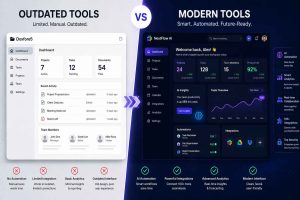
Modern productivity platforms now provide features that didn’t exist when Doxfore5 launched:
- AI task automation
- Smart reporting and insights
- Hundreds of integrations
- Real-time team collaboration
- Cloud-first security
This is why many users are gradually moving away from older tools.
How to Transition Safely From Doxfore5
If you decide to switch, follow a smart migration plan.
Step 1: Audit Your Current Setup
List your workflows, files, integrations, and team needs.
Step 2: Choose a Future-Ready Tool
Pick software that fits your long-term growth, not just current needs.
Step 3: Run Both Tools Temporarily
Use both platforms together for a short time to avoid disruption.
Step 4: Train Your Team
Provide tutorials and onboarding to ensure smooth adoption.
The Future of Doxfore5
Doxfore5 still has a user base, but the warning signs are clear.
Without major innovation or a new development roadmap, its relevance will likely continue to decline.
Software survives through:
- Continuous updates
- Strong community support
- Innovation and integrations
Without these, even successful tools slowly fade.
FAQs
1. Is Doxfore5 still available in 2026?
Yes, Doxfore5 is still available and functional, but it has not received major updates recently.
2. Why are people saying Doxfore5 is dying?
Users are concerned due to slow development, fewer new features, declining community activity, and strong competition from modern tools.
3. Is it safe to continue using Doxfore5?
For basic workflows and small teams, it is still usable. However, growing businesses may face limitations over time.
4. What are the risks of staying with Doxfore5 long term?
Possible risks include security issues, compatibility problems, and difficulty migrating data later.
5. Should I switch from Doxfore5 now?
If you need automation, integrations, and advanced productivity features, it’s smart to start planning a transition.
Final Verdict — Is the Software Doxfore5 Dying?
Doxfore5 is not officially dead, and for many existing users it still works reliably for basic workflows. However, the software is clearly losing momentum. The slow pace of innovation, reduced community activity, and rapidly advancing competitors all point to a tool that is moving into the late stage of its lifecycle.
For individuals or small teams with simple needs, there’s no urgent reason to panic or switch overnight. You can continue using Doxfore5 in the short term without major risk.
But for growing businesses, scaling teams, or users who want automation, integrations, and modern productivity features, the long-term outlook is uncertain. Waiting until support or compatibility becomes a problem could make migration more stressful and expensive.