If you have been relying on ChatGPT for studying you are probably missing out on a lot. There are intelligence study tools that are better than ChatGPT for specific academic tasks. Once I switched to these tools my study sessions became more productive. I am not saying ChatGPT is bad. It is great for things.. When it comes to focused and structured learning some of these tools are much better.
Let me walk you through what I tested what worked and what is worth your time.
Why students are ditching ChatGPT for study tools is because ChatGPT is a generalist. It is like going to a doctor when you actually need a specialist. For studying you need something that understands how learning works, such as repetition, active recall, concept mapping, citation and summarization. Not just a chatbot that answers questions.
I spent six weeks trying out different artificial intelligence tools while preparing for my graduate-level economics exam. I used each one for least a week. Here is what I found.
1. Khanmigo by Khan Academy is the best for concept breakdown. If you are struggling with a subject like math, physics or history Khanmigo is remarkable. Unlike ChatGPT it does not just give you the answer. It guides you toward it like a tutor who asks, “What do you think happens next?” That approach really changed how I understood supply and demand curves.
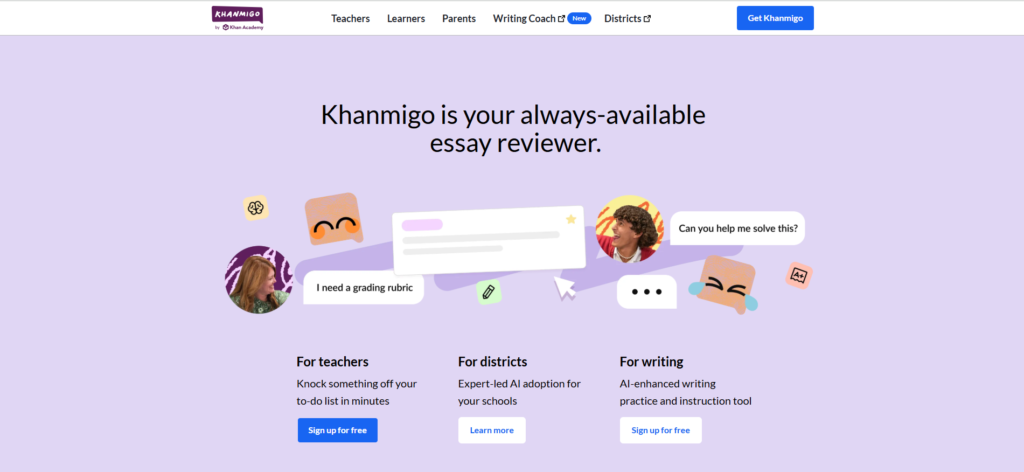
I once asked Khanmigo to help me understand the paradox of thrift. Of giving me a lot of text it asked me what I already knew, built on that and gave me a real-world example: Japans economy in the 1990s. That is the kind of teaching that sticks.
Khanmigo is for school and college students who want to actually understand concepts not just memorize them.
2. Notion AI is the best for organized note-taking. I know it sounds like a productivity tool, not a study tool.. Hear me out. When I was reviewing over 300 pages of research papers Notion AI helped me summarize, tag and connect ideas in ways ChatGPT never could because all my notes were in one place.
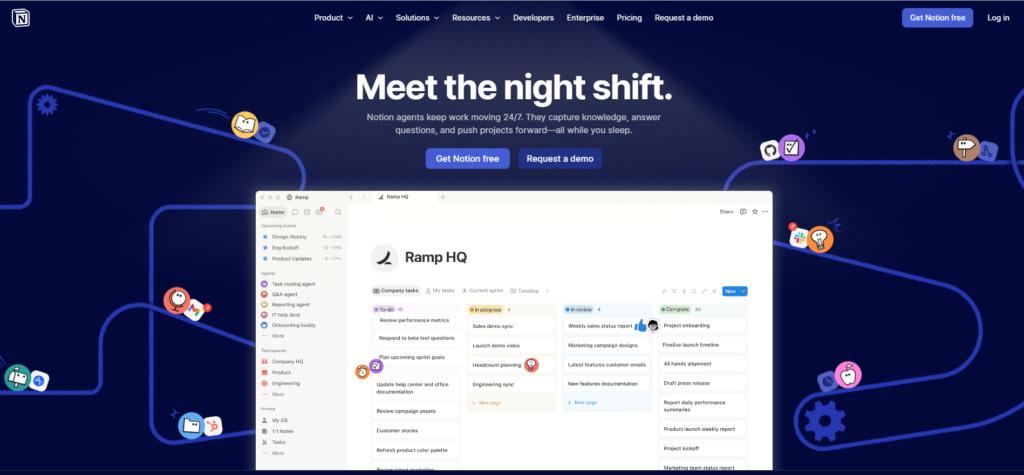
I could highlight an academic paragraph ask it to simplify it and it would give me a clean readable version right inside my notes. No switching tabs, no copying and pasting. Focused learning.
For example I summarized a 40-page economics paper in about 12 minutes. Then I asked Notion AI to pull out the three arguments format them as bullet points and suggest two counterarguments. It was done.
Notion AI is for students dealing with heavy reading loads or research-heavy subjects.
3. Quizlet AI, also known as Q-Chat is the best for recall and flashcards. Quizlet has been around for a time but their artificial intelligence layer is really impressive now. Q-Chat turns your notes into flashcard sessions quiz formats and even simulates a dialogue where it quizzes you conversationally.
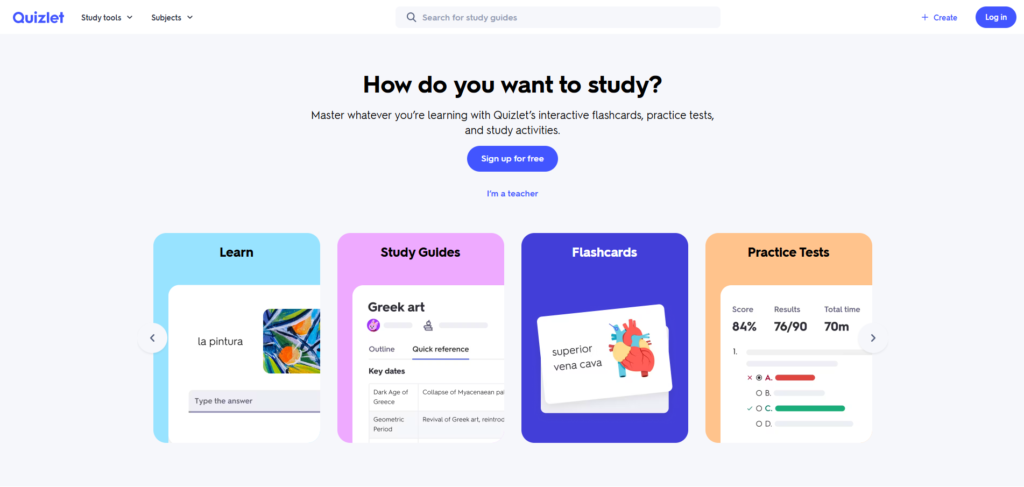
What makes it better than ChatGPT for studying is that it is built around learning science. Spaced repetition, difficulty tracking what you get wrong and drilling you on it. ChatGPT does not remember what you got wrong week. Quizlet does.
I used this when preparing for a marketing elective. I uploaded my lecture notes. Within minutes I had a custom quiz set. It even generated questions, the kind your professor loves to throw in just to mess with you.
Quizlet AI is for anyone cramming for exams or needing to memorize a lot of information.
4. Consensus is the best for research. Citing real studies. This one really surprised me. Consensus is an intelligence-powered academic search engine. You ask it a research question. It pulls actual peer-reviewed studies summarizes the findings and tells you what the scientific consensus is.
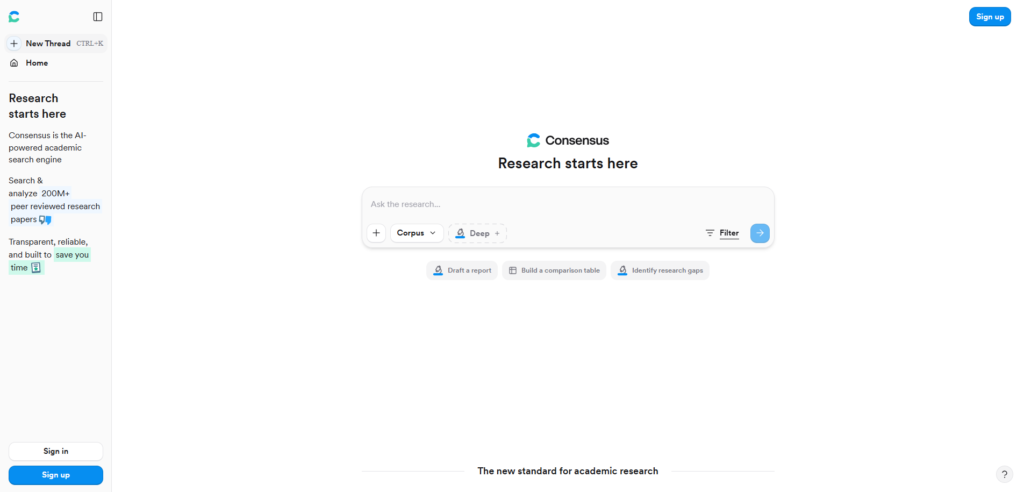
If you ask ChatGPT “Does sleep affect memory?” you get an answer but with no sources you can actually cite. If you ask Consensus the thing you get: “Based on 14 peer-reviewed studies there is strong evidence that REM sleep consolidates episodic memory.” With links.
For my term paper on economics Consensus saved me probably four hours of digging through Google Scholar.
Consensus is for university students, researchers and anyone writing papers.
5. Explainpaper is the best for academic texts. Have you ever stared at a research paper. Felt like it was written in another language? Explainpaper is built for that moment.
You upload a PDF of any paper highlight a confusing sentence or paragraph and it explains it in plain English. It is laser-focused on one thing. Does it brilliantly. ChatGPT can do something but you would have to paste text in manually. Explainpaper keeps the reading and the explanation side by side which changes the experience.
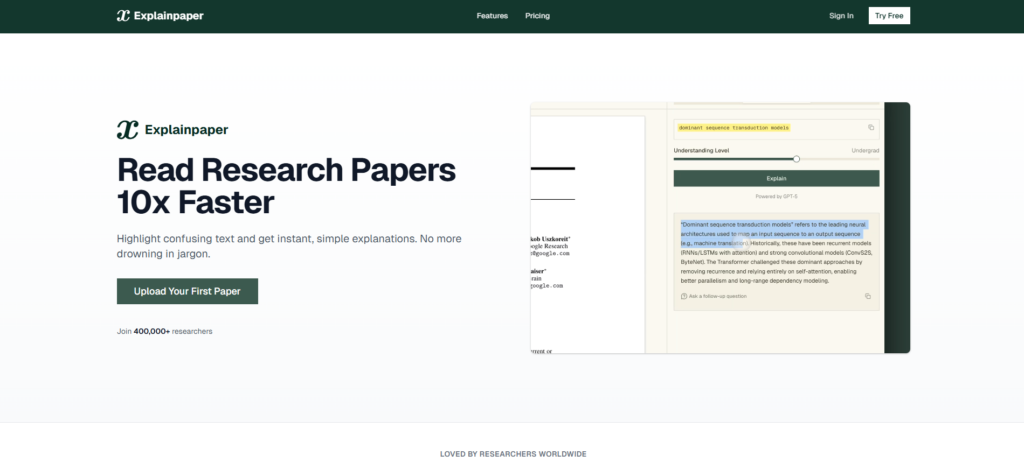
I used it with a 2019 paper on policy and the zero lower bound. Normally that would have taken me an hour to parse. With Explainpaper I was through it in 20 minutes actually understanding what I was reading.
Explainpaper is for students, researchers and anyone reading complex academic or scientific literature.
6. Socratic by Google is the best for visual explanations. Socratic is an app from Google that uses artificial intelligence and computer vision. You take a photo of a problem a math equation, a chemistry diagram, a paragraph from a textbook. It gives you a visual step-by-step explanation.
It is brilliant for STEM subjects. I handed my phone to my sister she is in high school studying trigonometry and she immediately understood how to solve a problem she had been stuck on for 45 minutes. The visual format does something that walls of text can not.
Socratic is for high school students in STEM.
7. Otter.ai is the best for lecture notes. If you are in university you know the pain of trying to take notes while also actually listening in a lecture. Otter.ai records your lectures and transcribes them in time then its artificial intelligence summarizes the key points afterward.
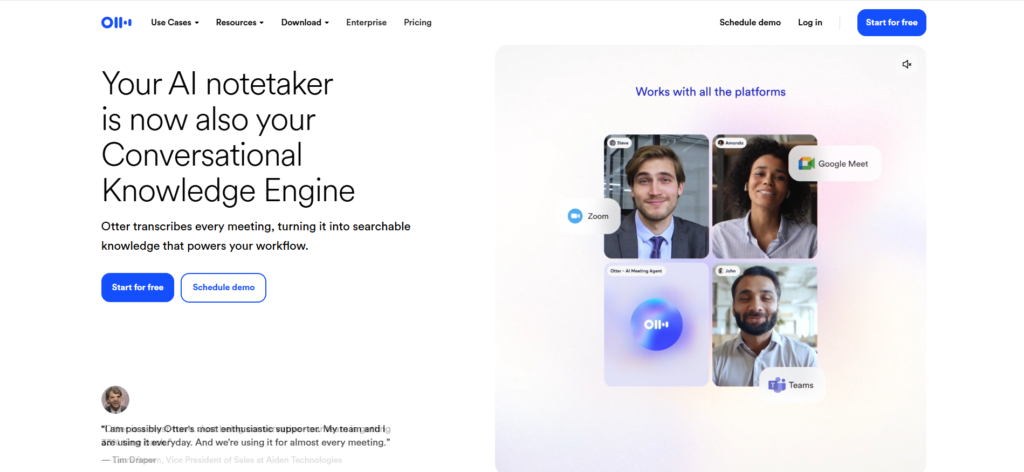
After a two-hour economics lecture I had a bulleted summary with timestamps pointing to specific parts of the recording. I reviewed the lecture in 15 minutes that evening. My grades noticeably improved from actually retaining what was said in class.
Otter.ai is for college and university students attending lectures.
The honest comparison is that ChatGPT still wins in some areas. ChatGPT is still the king of ended brainstorming, essay drafting and general Q&A. If you need to bounce ideas outline an essay or get an explanation of something broad it is still excellent.
The difference is specialization. The tools above were built with students and learning in mind. They integrate with how memory works, how research flows, how lectures happen. ChatGPT is a tool. These tools are specialized.
To pick the tool for your situation here is a simple breakdown based on what you actually need:
If you need to understand a concept deeply use Khanmigo. If you need to organize notes and summaries use Notion AI. If you need to memorize and quiz yourself use Quizlet AI. If you need to find research with citations use Consensus. If you need to read academic papers use Explainpaper. If you need STEM explanations use Socratic. If you need to capture lecture notes use Otter.ai.
In the end it is not about replacing ChatGPT. The students I know who are getting the results are not picking one artificial intelligence tool. They are building a toolkit. Otter.ai for lectures Consensus for research Quizlet for revision Explainpaper for reading and yes ChatGPT for drafting and brainstorming.
The real shift is moving from using intelligence as a shortcut to using it as a learning accelerator. These tools do not do the thinking for you they help you think better faster and, with depth.
If you have been coasting on ChatGPT for everything try one of these tools this week. Pick one that matches where you are struggling. You might be surprised how difference the right tool makes.